The group show in IHC, Delhi explores the philosophy of non-duality.
The Visual Arts Gallery at India Habitat Centre, New Delhi, hosted Advaya, a group art exhibition featuring artists from across India. Running from July 5 to July 9, the exhibition presented more than a collection of artworks—it offered a thoughtful reflection on artistic collaboration and the philosophical idea of non-duality.
The word Advaya, now rarely used in everyday Hindi, literally means “without duality” or “beyond division.” Rooted in Indian philosophical traditions, particularly Advaita Vedanta and Buddhist thought, it refers to a state where distinctions between the self and the other, subject and object, or form and the formless dissolve into a unified consciousness. In the context of this exhibition, Advaya became more than just a title; it represented an artistic vision where the boundary between the artist and the artwork faded, allowing creativity to emerge as a unified experience rather than a mere representation of external reality.
What made Advaya particularly distinctive was its organizational approach. Unlike most contemporary group exhibitions, it had no curator. It was conceived, organized and presented entirely by the participating artists themselves. Every decision— from selecting the artworks to designing the display—had been made collectively. In this sense, the exhibition embodied the very essence of its title, translating the philosophical concept of non-duality into a practical model of artistic cooperation.
Over the past few decades, the structure of group exhibitions has become fairly standardized, typically involving gallery owners, curators and a selected group of artists. While this model serves the needs of the art market by providing visibility and professional support, it often leaves little room for genuine interaction among artists. Many participants seldom engage with each other’s creative processes, ideas or artistic philosophies, reducing group exhibitions to a simple gathering of individual works rather than fostering a meaningful creative community. History, however, has repeatedly shown that artistic movements flourish through collaboration and intellectual exchange. Influential Indian collectives such as the Progressive Artists’ Group, Delhi Shilpi Chakra, and the Kolkata Group helped shape modern Indian art not merely through stylistic innovation but through sustained dialogue and mutual support among artists.
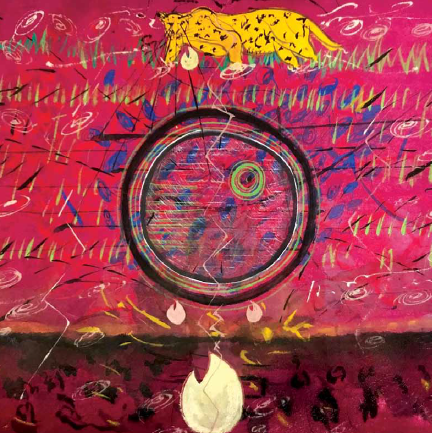
The participating artists in Advaya included Anita Kumari, Ashish Bose, Devilal Patidar, Heena Bhatt, J. D. Manikpuri, Kiran Soni Gupta, Manish Kumar Rao, Maitreyi Kumar, Pradeep Kumar Chauhan, Prem Shankar Prasad, Prof. (Dr.) Saroj Rani, Rakhi Kumar, Ramonkar, Ramakrishna Paul, and Sharmila Sharma. The exhibition showcased an impressive range of media, including metal sculpture, stoneware, ceramics, drawing, oil, acrylic, and watercolour paintings. Together, these works celebrated the richness, diversity and creative vitality of contemporary Indian art.
More than an exhibition, Advaya was a powerful reminder that the true evolution of art is driven not by competition, but by dialogue, collaboration and a shared creative consciousness.