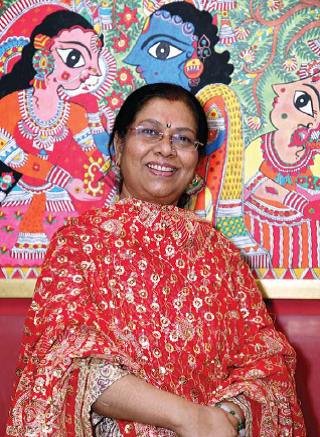
The original paintings of Raja Ravi Varma, one of India’s most celebrated artists, are expected to travel to national and international exhibitions in the future, according to Radhikaraje Gaekwad, custodian of the collection and a member of Vadodara’s Gaekwad royal family. The announcement brings renewed attention to a remarkable collection of artworks that has remained closely associated with the royal heritage of Baroda, now known as Vadodara.
The collection is housed at the historic Lakshmi Vilas Palace and the Maharaja Fatehsingh Museum in Vadodara. It represents an important chapter in the history of Indian art, reflecting the relationship between royal patronage and artistic innovation during the late nineteenth century.
According to a report published by The Hindu on October 11, 2026, the paintings last travelled outside Vadodara around a decade ago, when they were exhibited at London’s Victoria and Albert Museum. In India, the works were previously exhibited at the National Gallery of Modern Art in Mumbai approximately two decades ago. Their proposed return to exhibition spaces could provide art enthusiasts, researchers and collectors with fresh opportunities to experience these historic masterpieces.
A Royal Legacy of Art and Patronage
Raja Ravi Varma (1848–1906) occupies a distinctive position in Indian art history for his ability to combine European academic techniques, particularly oil painting and realistic representation, with subjects drawn from Indian mythology, literature and royal life. His paintings of Hindu deities, mythological characters and scenes from the epics helped shape the visual imagination of generations of Indians.
The Gaekwad royal family played a significant role in the artist’s career. Maharaja Sayajirao Gaekwad III commissioned works from Ravi Varma during the late nineteenth century, providing him with an important platform at a time when his reputation was still developing. The royal commission became a defining chapter in the artist’s journey and contributed to the creation of the collection now associated with Vadodara.
Manda Hingurao, curator and secretary of the Maharaja Fatehsingh Museum, highlighted the importance of this association, explaining that the artist’s work gained wider recognition following the Gaekwad commission. The patronage also helped support Ravi Varma’s artistic ambitions, which eventually extended beyond royal circles.
Ravi Varma’s contribution to Indian visual culture grew further through his establishment of a printing press in Lonavala. By reproducing his paintings as lithographs, he helped make images of gods and goddesses accessible to a much wider public. His realistic depictions became influential references for religious imagery, calendars, prints and popular visual culture across the country.
Preserving an Extensive Royal Collection
The renewed focus on Ravi Varma’s paintings comes at a time when the Maharaja Fatehsingh Museum is undergoing major renovation. Alongside these developments, a modern, climate-controlled and secure storage facility measuring approximately 20,000 square feet is being developed by the Maharaja Fatehsingh Museum Trust.
The proposed facility is intended to house more than 40,000 objects from the Gaekwad family collection, including paintings, sculptures, decorative arts, armoury, royal regalia, textiles and photographic archives. Plans for a newer, larger museum are also expected to provide expanded opportunities to showcase the collection.
Such infrastructure is essential for preserving historic artworks and other heritage objects, particularly when they are intended to be displayed in different locations. Climate control, secure transportation, specialised handling and conservation measures are important considerations when valuable paintings travel for exhibitions.
The possibility of sending Ravi Varma’s works to audiences beyond Vadodara therefore represents both an opportunity and a responsibility: to share the collection’s artistic significance while ensuring its long-term preservation.
Vadodara’s Place on the Cultural Map
The planned exhibitions also underline Vadodara’s importance as a centre of Indian art and cultural heritage. The city’s artistic identity has been shaped by the Gaekwad dynasty’s patronage, historic institutions and its longstanding engagement with Indian and European artistic traditions.
The announcement was made on the sidelines of AIKYAM 2026, a cultural initiative organised by Sopaan that concluded in October. Held under the theme Rasa & Realism, the programme brought together international delegates, cultural practitioners and art experts to explore the relationship between heritage, artistic expression and contemporary cultural dialogue.
The event highlighted Vadodara’s potential as a destination for cultural tourism while drawing attention to the city’s architectural landmarks, royal collections and living traditions.
For audiences, the prospect of seeing Raja Ravi Varma’s original paintings in exhibitions across India and internationally offers an opportunity to engage more closely with an artist whose influence extends far beyond the boundaries of traditional art institutions. His work bridges mythology and realism, royal patronage and popular culture, and the history of Indian painting and its continuing visual legacy.
As plans for future exhibitions take shape, the Gaekwad collection could play an important role in introducing new generations to Ravi Varma’s artistic achievements while bringing greater international attention to Vadodara’s rich cultural heritage.